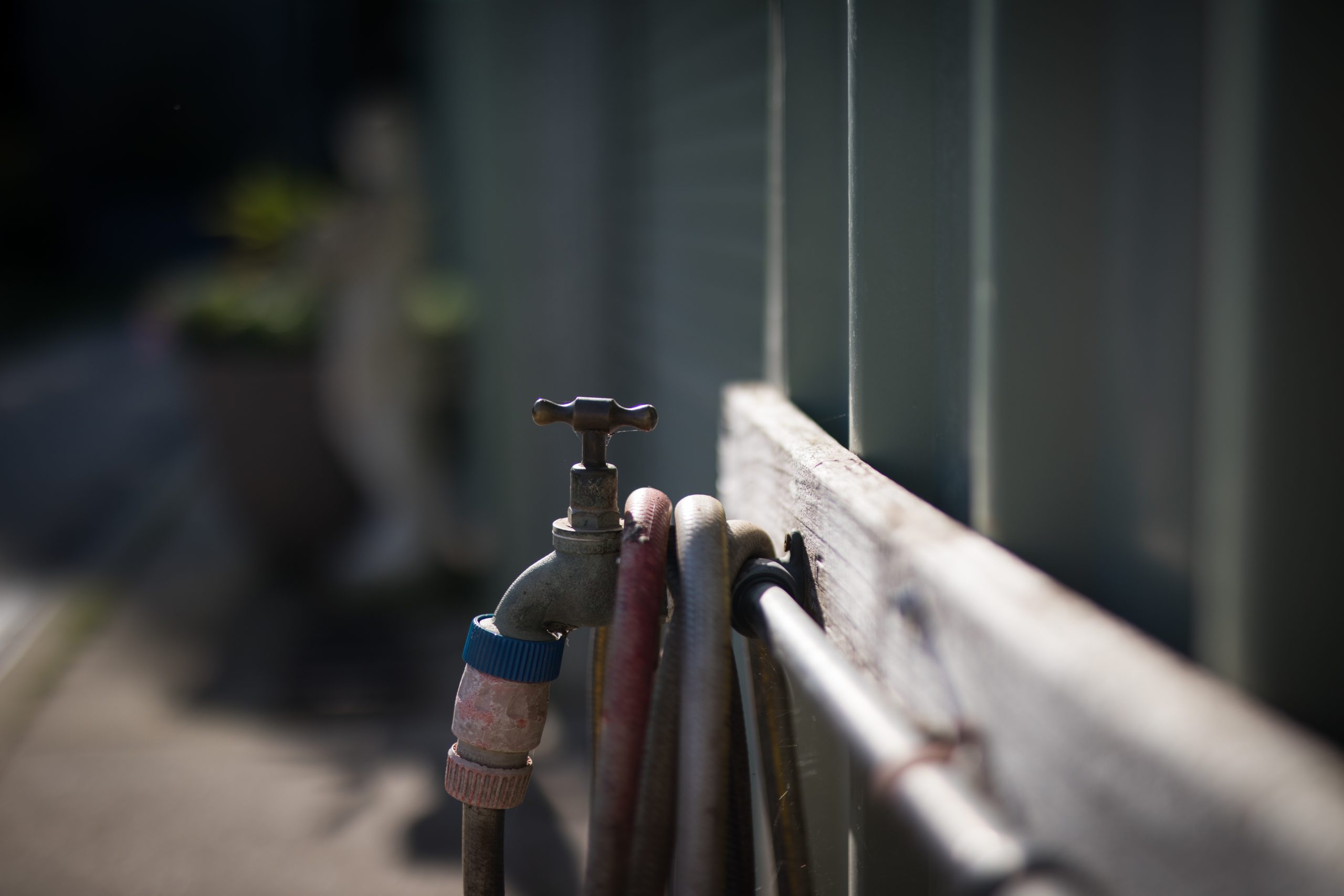
When a pipe bursts or a flexi hose lets go under your sink, every second counts. Water can pour into your home at a frightening rate, soaking flooring, walls and electrics before you’ve even worked out where it’s coming from. Knowing how to turn off water mains at your property is the single most useful thing you can do to limit the damage while you wait for a plumber. The good news is that it takes about 60 seconds once you know where to look and what to turn.
This guide walks you through exactly how to shut off the water at a Gold Coast home, what to do for units and apartments, how to handle a stuck valve, and the right steps to take once the water is off. Keep it handy, because the time to learn this is before the emergency, not during it.
Why Knowing How to Turn Off Water Mains Matters
A burst flexi hose or a failed pipe can release a huge volume of water in minutes. Left running, that water damages structural timber, ruins carpet and cabinetry, and creates a serious electrical hazard if it reaches power points. Shutting off the supply at the main stops the flow to your entire property, which buys you time and dramatically reduces the repair bill.
There’s a financial angle too. On the Gold Coast, you’re responsible for every pipe and fitting on your side of the water meter. The City of Gold Coast maintains the meter and the supply up to your boundary, but anything after that is on you, including the water that pours out of a leak and onto your bill. Stopping it quickly protects both your home and your hip pocket.
Being able to isolate the supply also matters for everyday jobs: replacing a tap, swapping a toilet cistern, or doing any work that involves opening up the plumbing. Five minutes spent locating your shut-off valve now is worth it the first time you actually need it.
Step 1: Locate Your Water Meter and Main Shut-Off Valve
For most detached Gold Coast houses, the water meter sits towards the front of the property, close to the left or right boundary, usually in the grass verge or near the front fence. It’s at ground level under a lid marked “Water Meter.” The City of Gold Coast confirms meters are typically positioned near the front boundary, roughly 500mm in from one side.
Lift the lid and clear away any dirt, leaves or insects so you can see clearly inside. You’ll find two things: the meter itself (with black and red number dials) and the main shut-off valve, which sits on the pipe feeding water into your property. That valve is what you’ll turn.
If you rent, or you’ve just moved in, find and test this location on a calm day rather than discovering it mid-flood. It’s worth showing everyone in the household where it is, too.
Step 2: Identify Which Type of Valve You Have
Gold Coast properties generally have one of two valve types at the meter, and they close in slightly different ways:
- Quarter-turn ball valve: This has a straight lever handle. To shut the water off, rotate the lever 90 degrees so it sits across (perpendicular to) the pipe. When the lever lines up with the pipe, water is on; when it’s across the pipe, water is off.
- T-top (or gate) valve: This has a T-shaped or round handle. Turn it clockwise (to the right) until it stops completely. It may take several full turns to close.
If you’re not sure which you have, the rule of thumb covers both: turn it clockwise as far as it will comfortably go. Both valve types are designed to be either fully open or fully closed, so don’t leave one half-turned.
Step 3: Turn the Valve Off
Once you’ve identified the valve, close it. For a lever valve, swing it the full 90 degrees until it’s firm. For a T-top valve, keep turning clockwise until it won’t turn any further. If the handle is stiff, a pair of gloves or pliers can give you better grip, but apply steady pressure rather than yanking it.
That’s the core of it. With the main valve closed, no water can flow from the council supply into any tap, toilet or pipe on your property.
Step 4: Confirm the Water Is Actually Off
Never assume the valve has done its job. Confirm it. Open a tap inside the house, or release pressure from a garden tap, and watch the flow. It should slow to a trickle and then stop within a few seconds. If water keeps running freely, the valve hasn’t sealed or you may have turned the wrong fitting, so go back and check.
This quick check is the step most people skip in a panic, and it’s the one that tells you whether the emergency is genuinely under control.
Turning Off Water in a Unit or Apartment
Units, townhouses and strata properties don’t always have an individual street meter you can access. In a duplex or block of units, there may be one shared meter, or a bank of meters servicing multiple dwellings. Turning off the main there could cut water to your neighbours as well.
In these cases, your fastest option is usually an isolation valve closer to the leak. Look under the kitchen sink, under the bathroom vanity, behind the toilet, or under the laundry tub. Many fixtures have a small isolation tap on the supply line you can turn off independently. If you can’t find one quickly and water is pouring in, head to the shared meter or ask your building manager where the complex shut-off is located. The principle stays the same: stop the closest valve you can reach, then escalate to the main if needed.
What to Do Once the Water Is Off
Shutting the water off is step one. Here’s how to keep everyone safe and limit the damage while help is on the way:
- Keep people away from the water. Wet tiles are slippery, and standing water near power points is dangerous. Move kids and pets clear.
- Deal with electrical risk. If water is near power points or appliances, don’t touch it. Only switch the power off at the switchboard if it’s completely safe to do so.
- Drain the pressure. Open a cold tap (ideally a low one, like an outside or laundry tap) for 10 to 20 seconds to release pressure left in the pipes. This can slow any residual leaking.
- Mop up and protect belongings. Soak up standing water and move furniture, rugs and valuables out of the wet zone to reduce flooring and carpet damage.
- Call a licensed plumber. Turning off the main controls the symptom, not the cause. You’ll still need the burst pipe, failed hose or leak repaired before the water goes back on.
If the leak is uncontrolled and you can’t stop the flow, don’t wait. Our 24-hour emergency plumbers answer the phone around the clock and can talk you through it or get someone out fast.
What If the Valve Is Stuck or Won’t Turn?
Meter valves that haven’t been touched in years can seize up. If yours won’t budge, don’t force it to the point of snapping the handle, because a broken valve turns a contained problem into a much bigger one. As water authority guidance notes, for a stiff tap you can try turning it gently anticlockwise first to break the seal, then back clockwise to close.
If it still won’t move, the meter and stop-valve up to your boundary are the council’s responsibility. You can call the City of Gold Coast on 1300 000 928 for help with a faulty meter valve. In the meantime, fall back to isolation valves at the leaking fixture and call a plumber to isolate the supply safely.
How to Prevent the Next Emergency
A few simple habits make burst-pipe panic far less likely:
- Check your flexi hoses. Braided flexi hoses under sinks and vanities are one of the most common causes of sudden household flooding in Australia. They have a limited lifespan and should be inspected for rust, bulging or fraying, and replaced before they fail.
- Run a meter test for hidden leaks. Turn off every tap and water-using appliance, then check the meter. If the dials are still moving, you have a leak. The City of Gold Coast also suggests taking a reading, using no water for 30 minutes, then reading again; if the number has climbed, there’s a leak to chase down.
- Don’t ignore small drips. A tap dripping once per second can waste a surprising amount of water, and a minor leak today is often tomorrow’s burst. Fixing leaking taps early is cheap insurance.
- Know your shut-off before you need it. Locate your main valve, check it turns, and make sure the meter box is clear and accessible.
Frequently Asked Questions
Where is the water shut-off valve on a Gold Coast house?
It’s at your water meter, usually near the front boundary of your property in the grass verge or near the front fence, under a lid marked “Water Meter.” The main shut-off valve is on the pipe running into your property and is either a lever (quarter-turn) or a T-top handle.
Which way do I turn the valve to shut the water off?
Turn it clockwise. For a quarter-turn lever valve, swing the lever 90 degrees so it sits across the pipe. For a T-top valve, turn the handle clockwise until it stops. To check it worked, open a tap and confirm the water stops flowing.
How do I turn off the water if I can’t reach the main valve?
Use the isolation valve closest to the leak instead. Look under the sink, vanity, toilet or laundry tub for a small tap on the supply line and turn it off. This isolates that fixture without shutting off the whole property, which is especially useful in units and apartments.
Who is responsible for the water meter and stop valve on the Gold Coast?
The City of Gold Coast maintains the water meter and the supply up to your property boundary, including the main stop valve at the meter. Everything after the meter, the pipes and fittings inside your boundary, is the property owner’s responsibility. If the meter valve itself is faulty, contact the council on 1300 000 928.
Do I still need a plumber after I turn the water off?
Yes. Shutting off the main stops the flooding but doesn’t fix what caused it. A burst pipe, split flexi hose or failed fitting still needs to be repaired by a licensed plumber before the water can safely be turned back on.
Final Thoughts
Knowing how to turn off water mains at your home is one of those skills you hope you never need but will be very glad to have when a pipe lets go at 11pm. Locate your meter, check the valve turns, and share the location with your household. Then, when something does go wrong, you can stop the water in under a minute and limit the damage.
When the water’s off and you need the leak fixed properly, we’re here 24/7 with no call-out fee and upfront pricing. Get in touch with the team at Capital Plumbing for fast, reliable emergency plumbing and water leak repairs across the Gold Coast.